
Drain covers · 5 minutes · Updated November 2026
How to remove a shower drain cover.
Five kinds of cover, and each comes off a different way. Work out which one you have before you reach for a screwdriver, because prying at a screwed cover chips the shower.
 By Andrew HendersonRed Seal Plumber
Which cover do you have?
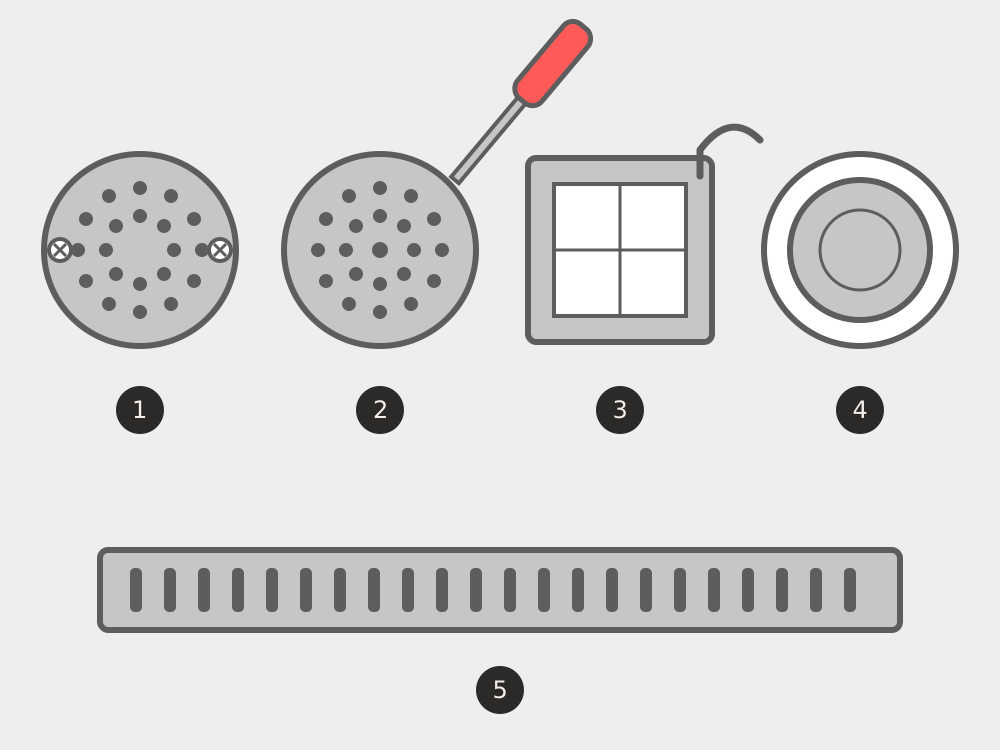
| Cover | How to tell | How it comes off |
|---|---|---|
| 1. Screwed | One screw in the middle or two at the edges | Undo the screws and lift |
| 2. Snap-in | Round, no screws, often a small notch at the rim | Pry up gently at the notch with a flat screwdriver |
| 3. Tile-in or lift-out | Square, sits loose in a frame, sometimes with a tile set into it | Hook it with the lifting key or a bent wire and lift straight up |
| 4. Pop-up | A solid cap you press to open and close | Open it, then unscrew the cap counterclockwise |
| 5. Linear | A long narrow grate along a wall or the entry | Lift out with the key. Then lift out the hair basket underneath |
Screwed covers
- Lay a cloth over the drain holes so a dropped screw can't fall through.
- Pick a screwdriver that fits the screw head exactly. Old screws strip easily.
- Press down firmly and turn counterclockwise. If it won't move, don't force it. See the next section.
- Lift the cover off and put the screws in a cup, away from the drain.
If the screw is stuck or stripped
- Scrape the soap scale out of the screw head with a pick or a small nail first. A screwdriver that seats fully rarely slips.
- Put a drop of penetrating oil on it and give it ten minutes.
- A wide rubber band between the screwdriver and a worn screw head gives it something to bite.
- If the head is chewed past saving, stop. Drilling it out risks the drain body underneath, and that is a far bigger repair than a clog.
Andrew's pro tip: A rusted screw in an old brass drain can snap off flush. If it feels like it is twisting rather than turning, leave it and work through the cover holes with a hair strip instead.
Snap-in covers
Find the notch at the rim. Slide a flat screwdriver into it and lift a little, then move a quarter of the way round and lift again. Work it up evenly. Levering hard from one side bends the cover or chips the finish on an acrylic or fibreglass shower. A strip of masking tape on the shower under the screwdriver saves the surface.
Tile-in and linear drains
These lift straight up and out. Most came with a small hooked key, which is usually long gone. A bent paper clip or a piece of stiff wire hooked through a slot does the same. Under a linear grate there is usually a removable hair basket or a channel. Lift the basket out and empty it. That alone clears most linear drains.
Can't get it off at all?
You can still clear most clogs. A plastic hair strip is thin enough to go through the holes or slots of most covers. Feed it through, work it up and down and pull it back. It is slower and you can't see what you're doing, but it works.
Putting it back
Clean the underside of the cover before it goes back on. The black film on it is the start of the next clog and the main source of drain smell. Tighten screws until snug and stop: they thread into plastic or soft brass, and both strip.
Questions
Do I have to remove the cover to unclog a shower?
No, but it helps a lot. With the cover off you can see the hair and pull most of it out by hand. With it on, you are fishing through the holes with a hair strip.
The cover is grouted or siliconed in. Now what?
Leave it and work through the holes. A cover that has been sealed in was usually sealed to hide a loose or damaged drain body, and cutting it out can turn a clog into a leak.
What size replacement screws do I need?
It varies by maker, so take the old screw to the hardware store and match it. Buy stainless steel. Plain steel screws rust solid within a couple of years.
More shower drain help
This page is general information, not professional advice for your situation. If you are unsure at any point, stop and call a licensed plumber. See the legal disclaimer.